3 Common Misconceptions about Protein Intake and Weight Loss
The key to losing bodyfat and keeping it off is to maintain a sustained negative energy balance. Simply put, your daily caloric intake needs to stay below the daily calories you burn.
Maintaining adequate levels of protein while reducing calories is critical in any sustained weight loss strategy.
Without adequate protein our bodies tend to shed lean muscle tissue which reduces our metabolism - the calories we burn. This makes it even tougher to lose the bodyfat.
This is why selecting low calorie complete protein sources should be the most important part of your weight loss nutritional program.
The internet is full of weight loss information. Much of this is designed to get you to buy a product. I'm here to help you filter out the misinformation and base your decisions on objective facts.
#1. All chicken and fish sources are roughly equal. The breaded and battered portions sold in grocery stores bear little nutritional resemblance to whole chicken or fish.
Let's compare 2 4-ounce portions of whole tilapia with an equivalent sized portion of battered fish.
A tilapia filet provides 19 grams protein and only 90 calories.

In contrast the battered fish portion provides 11 grams protein, 260 calories with 14 grams of fat and 23g of carbs. Roughly half the protein and 3 times the calories as actual fish. Also these processed battered products tend to be high in sodium.

#2. All dairy protein sources are high in calories. Advertising has programmed us towards fruit yogurt which tend to be quite high in added sugar, and cheese products which tend to be high in fat.
2/3 cup original strawberry yogurt provides 5 grams protein and 33 grams carbs (23 grams added sugar) totalling 170 calories:

in comparison, 1/2 cup cottage cheese delivers 13 grams protein and 100 calories:
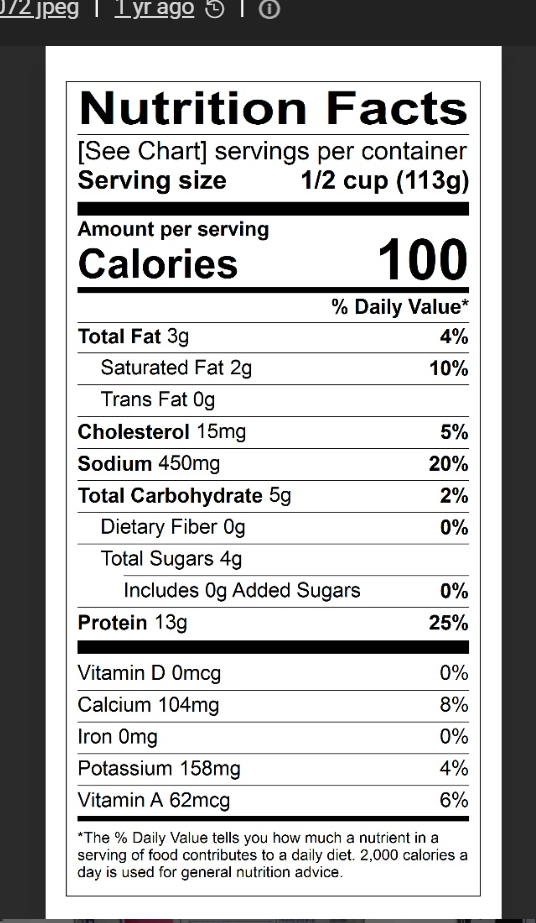
and 2/3 cup plain greek yogurt provides 17 grams protein in 100 calories. It can be eaten by itself, mixed with cereal or sliced fruit or substituted for sour creme.

#3. A vegan diet makes it hard to get complete protein sources without spending a fortune in a health food store. A more economical option is to buy the raw ingredients online and then learn to make your own vegan meals.
Vital wheat gluten is one of the purest complete sources available. A 6-pound bag can be purchased on amazon for under $30 (at this time) making it well below the price of most beef, pork and fish grocery store prices. Wheat gluten is the main ingredient in the popular vegan meat alternative seitan (pronounced "say tan"). 1/4 cup vital wheat gluten provides 24 grams protein in 120 calories. There are 1/4 cup 90 servings in a 6 pound bag and depending on the ingredients, a 1/4 cup of vital wheat gluten makes 12-16 ounces of seitan. Do the math - that's a LOT of hamburger.
Invest a few minutes on the internet and you'll find many simple seitan recipes. Most involve another high protein vegan source like chick peas or black beans, with a few tablespoons of soy sauce, olive oil, apple cider vinegar and spices thrown in. Seitan is very versatile and there's very little cooking involved once the ingredients are mixed.
Whole soybeans can be found online for under $4 per pound and can be used to make homemade tofu and tempeh. Making tofu involves cooking soybeans to produce soy milk and then adding a coagulent to produce the curd. Making tempeh involves fermenting the soybeans with vinegar, adding a small amount of tempeh "starter" (Rhizopus spores) and setting it aside for 12 hours.
3 oz (85 grams) tofu provides 8 grams protein and 83 calories.
3 oz (85 grams) grams of tempeh provides 18 grams protein and 160 calories. The protein content of the tempeh varies based on the fermentation process.
Gluten and soy products are for everyone and should never be served without checking with your guests or family about possible allergic reactions.
Hopefully I've cleared up a few misconceptions about protein. Avoiding overly processed breaded meat products, substituting plain greek yogurt and cottage cheese for other higher calorie dairy products and experimenting with vital wheat gluten and soybean homemade recipes can significantly boost your protein intake while keeping your calorie consumption under your daily target.


Comments